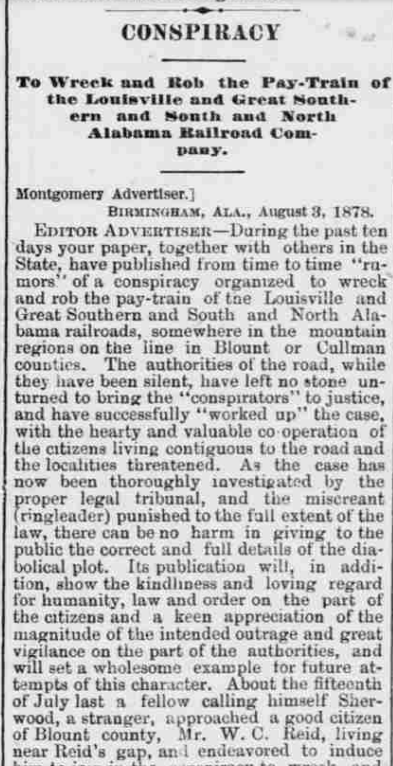


In mid-July 1878, a stranger calling himself Sherwood approached W.C. Reid - a Blount County man living near Reid’s Gap, and one of two real candidates (see Reid’s Gap) for who the place was actually named for - with a proposition: join a gang planning to wreck and rob the monthly pay-train of the Louisville & Great Southern and South & North Alabama Railroad, which ran regular payroll trips along the line.
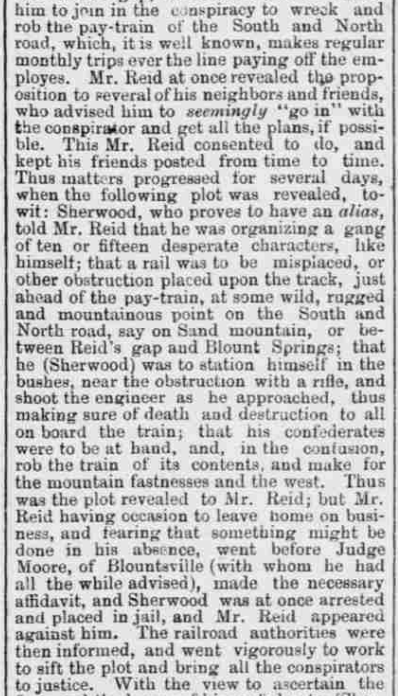
On the advice of his neighbors, Reid strung Sherwood along, pretending to go in with the scheme while reporting back what he learned. The plan, as Sherwood laid it out: misplace a rail or otherwise obstruct the track at some wild, rugged point on the line - Sand Mountain, or somewhere between Reid’s Gap and Blount Springs - where Sherwood would wait in the brush with a rifle and shoot the engineer as the train approached, while confederates robbed the wrecked train and scattered toward “the mountain fastnesses and the west.”
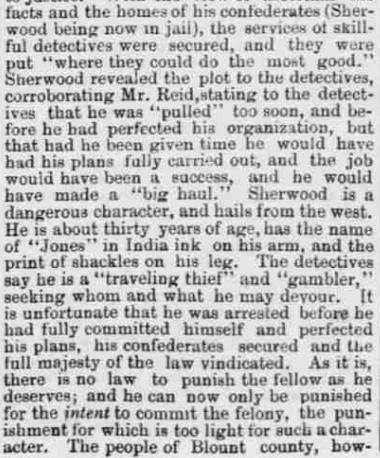
Needing to leave home on business and wary of what might happen while he was gone, Reid swore an affidavit before Judge Moore in Blountsville, who’d been in his confidence throughout. Sherwood was arrested and jailed before he’d finished recruiting his gang or fully locking in the plot. Railroad detectives brought in afterward got Sherwood to corroborate Reid’s account himself - he admitted he’d been “pulled” too soon, and that with more time the job would have been “a big haul.” They described him as a career “traveling thief and gambler” from out west, about thirty years old, with the name “Jones” tattooed on his arm in India ink and the marks of shackles on his leg.
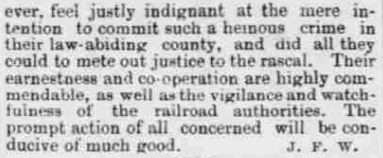
Because Sherwood was caught before the robbery itself - and before his confederates or full plan were ever locked down - the law could only charge him with intent to commit the felony, a lighter penalty than the completed crime would have carried. The Montgomery Advertiser’s account of it, published August 3, 1878, credited Blount County’s citizens and the railroad’s own vigilance for stopping it - and it stands as the earliest documented mention of Reid’s Gap by name in the historical record.

Related: Judge Moore also appears in a separate 1869 story - Smith Ford and the Vaughn Bridge.