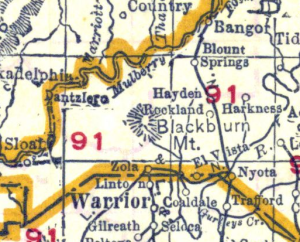


Nectar is the fourth core community in West Blount’s coverage area, alongside Hayden, Smoke Rise, and Blount Springs.
The settlement here predates Alabama statehood in 1819. During the Creek War of 1813-14, Andrew Jackson and his troops reportedly camped in the vicinity, opening the area to the wave of settlement that shaped much of west Blount County in the years that followed. The community’s first school was built in 1890.
By the late 1870s the place had a name: Tidmore, for Henry Tidmore, who became the settlement’s postmaster. In 1902, Tidmore was reappointed postmaster and the post office itself was renamed - from Tidmore to Nectar. The family’s patriarch, Henry Middleton Tidmore Sr. (1761-1853), is buried in the town’s own cemetery; he’d been dead a quarter century by the time the post office opened in 1878, so the working postmaster was a later descendant carrying the same name, but it’s almost certainly this same family the settlement was originally named for. Why the name changed has been called undocumented by outside historical references. The Town of Nectar’s own account answers it directly: an early community leader described the area as “the sweetest part of Blount County” - the source of both the name Nectar and the town’s motto today, “The Sweetest Place on Earth.”
The bridge
Nectar’s covered bridge, spanning the Locust Fork of the Black Warrior River, became the community’s best-known landmark. It was a substantial structure - 385 feet long, a Town Lattice truss built across four spans, reportedly the third-longest covered bridge ever built in Blount County and, at the time, the seventh-longest in the nation. It was built under foreman Zelma C. Tidwell, the same builder responsible for the Swann Covered Bridge near Cleveland the year before and Horton Mill Bridge the year after - effectively the man behind Blount County’s entire covered-bridge era, before he left bridge-building in 1936 to join the Alabama Highway Patrol.

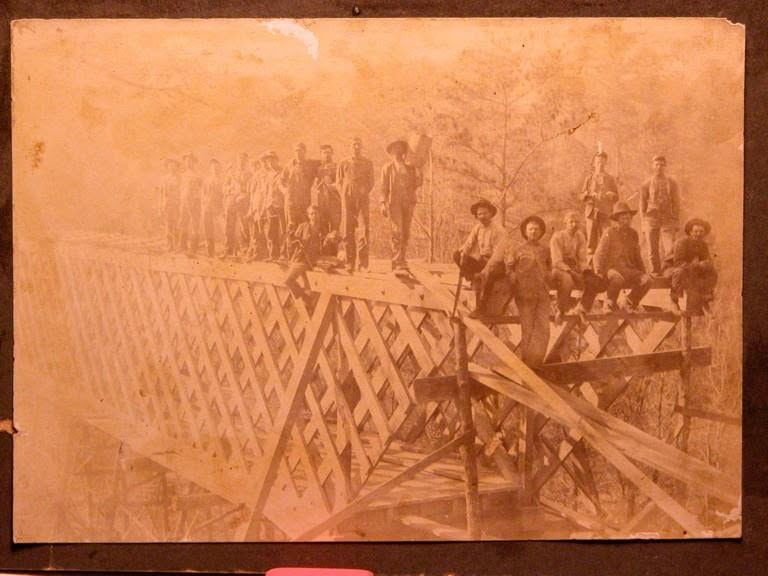
For decades it served as more than a crossing - a real community gathering spot, including baptisms held at the water’s edge beneath it. It was listed on the National Register of Historic Places on August 20, 1981.
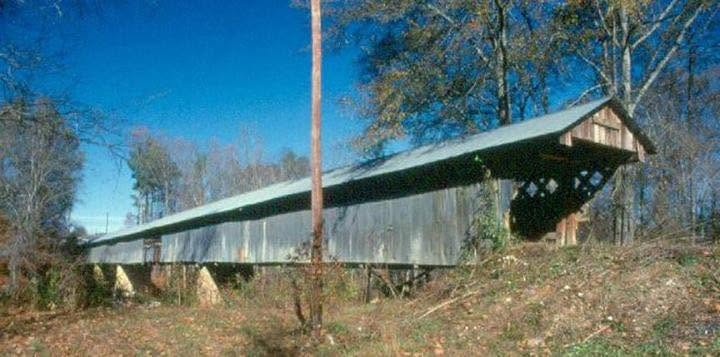
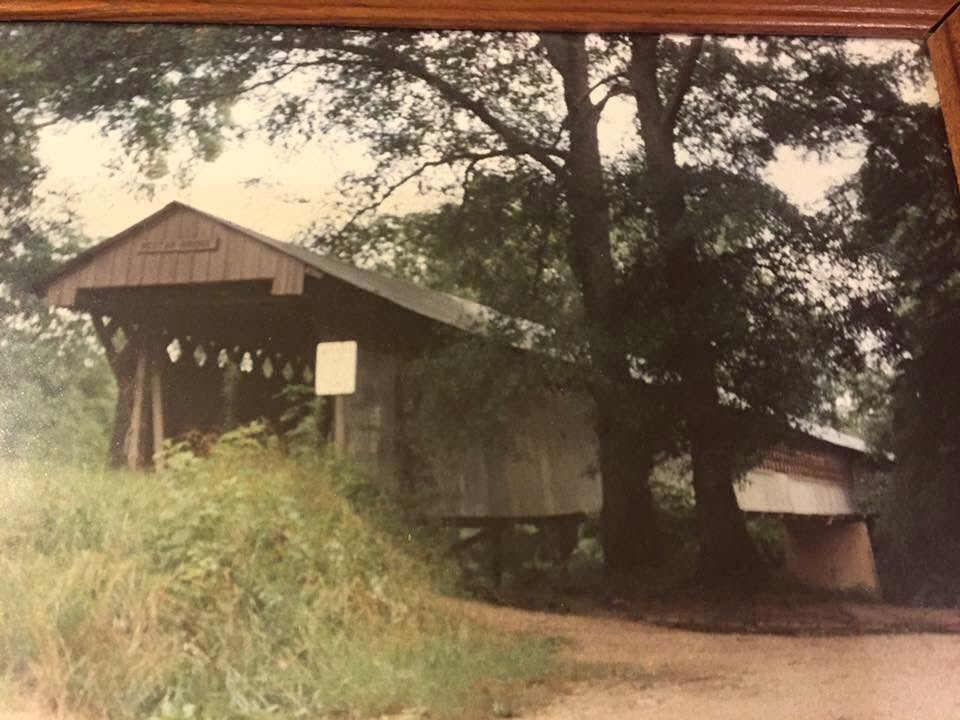
On June 13, 1993, the bridge was destroyed by arson. A concrete bridge now carries traffic at the crossing, but the original stone piers still stand in the river just south of it - a physical trace of the old bridge that anyone can still see today.
A town built on water
The Town of Nectar incorporated in 1976, and the reason was practical: the community’s drinking water supply was running short, and incorporating gave its founders a path to building a real municipal water system. That system is still the town’s own today - Nectar operates its own water department and treatment plant, alongside a volunteer fire department and a community center.
Sources: Encyclopedia of Alabama, “Nectar”; Town of Nectar, official site; Wikipedia, “Nectar Covered Bridge”; Wikipedia, “Nectar, Alabama”; and the construction and pre-1993 photos of the bridge, credited to Scott Carson and Debbie Johnson.