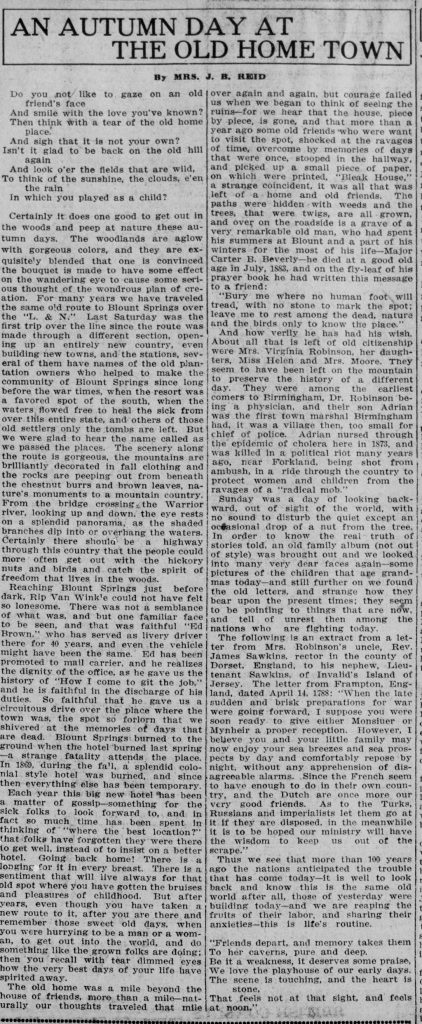


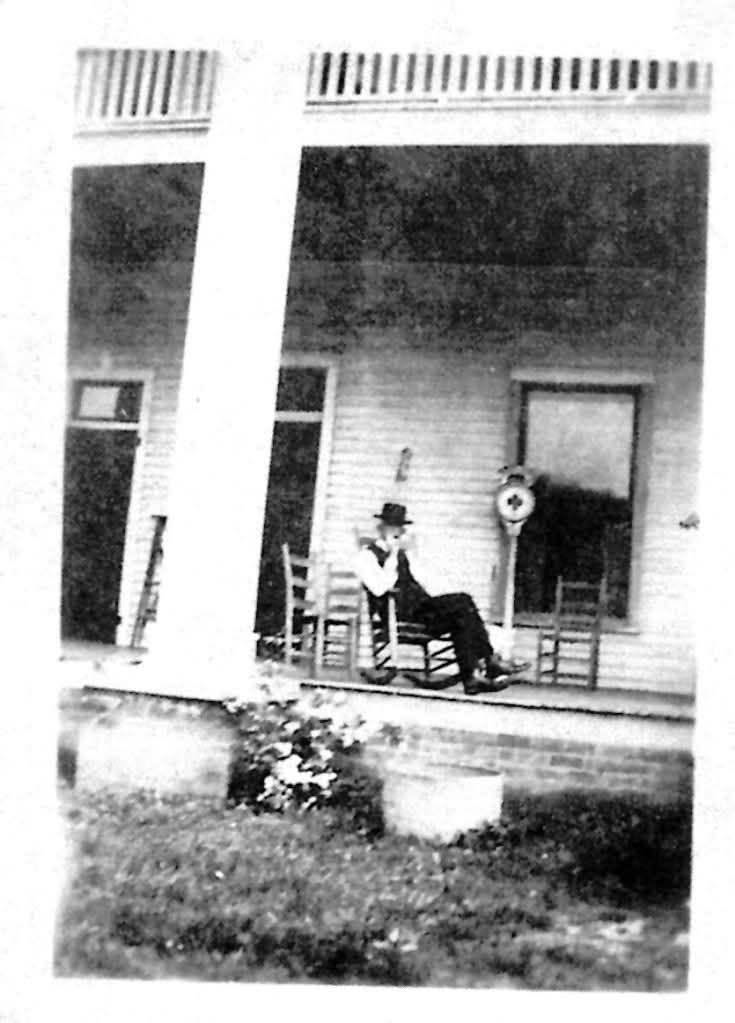
Reprinted in full below: a Birmingham Age-Herald feature from November 16, 1915, byline Mrs. J. B. Reid. It’s a personal, elegiac piece - a nostalgic return trip to Blount Springs, written less than a year after the resort’s second hotel fire had left the place, in her words, “so forlorn.” Real, contemporary testimony of what Blount Springs looked and felt like in the long years between its resort-era prosperity and its eventual decline, populated by real named residents: Ed Brown, the resort’s livery driver of forty years, newly promoted to mail carrier; Major Carter B. Beverly, buried on the mountainside by his own written request, with no stone to mark the spot; and the Robinson family, among the last of Blount Springs’ old citizenry. Reid returned to the subject six years later with a more optimistic, booster’s case for the resort’s revival: “A Near Birmingham Resort - Blount Springs” (1921).
Do you not like to gaze on an old friend’s face
And smile with the love you’ve known?
Then think with a tear of the old home place.
And sigh that it is not your own?
Isn’t it glad to be back on the old hill again
And look o’er the fields that are wild,
To think of the sunshine, the clouds, e’en the rain
In which you played as a child?
Certainly it does one good to get out in the woods and peep at nature these autumn days. The woodlands are aglow with gorgeous colors, and they are exquisitely blended that one is convinced the bouquet is made to have some effect on the wandering eye to cause some serious thought of the wondrous plan of creation. For many years we have traveled the same old route to Blount Springs over the “L. & N.” Last Saturday was the first trip over the line since the route was made through a different section, opening up an entirely new country, and building new towns, and the stations, several of them have names of the old plantation owners who helped to make the community of Blount Springs since long before the war times, when the resort was a favored spot of the south, when the waters flowed free to heal the sick from over this entire state, and others of those old settlers only the tombs are left. But we were glad to hear the name called as we passed the places. The scenery along the route is gorgeous, the mountains are brilliantly decorated in fall clothing and the rocks are peeping out from beneath the chestnut burrs and brown leaves, nature’s monuments to a mountain country. From the bridge crossing the Warrior river, looking up and down, the eye rests on a splendid panorama, as the shaded branches dip into or overhang the waters. Certainly there should be a highway through this country that the people could more often get out with the hickory nuts and birds and catch the spirit of freedom that lives in the woods.
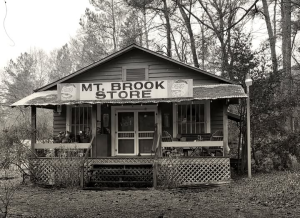
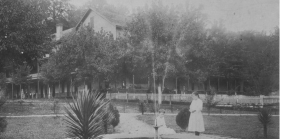
Reaching Blount Springs just before dark, Rip Van Winkle could not have felt so lonesome. There was not a semblance of what was, and but one familiar face to be seen, and that was faithful “Ed Brown,” who has served as livery driver there for 40 years, and even the vehicle might have been the same. Ed has been promoted to mail carrier, and he realizes the dignity of the office, as he gave us the history of “How I come to git the job,” and he is faithful in the discharge of his duties. So faithful that he gave us a circuitous drive over the place where the town was, the spot so forlorn that we shivered at the memories of days that are dead. Blount Springs burned to the ground when the hotel burned last spring - a strange fatality attends the place. In 1869, during the fall, a splendid colonial style hotel was burned, and since then everything else has been temporary.

Each year this big new hotel has been a matter of gossip - something for the sick folks to look forward to, and in fact so much time has been spent in thinking of “where the best location?” that folks have forgotten they were there to get well, instead of to insist on a better hotel. Going back home! There is a longing for it in every breast. There is a sentiment that will live always for that old spot where you have gotten the bruises and pleasures of childhood. But after years, even though you have taken a new route to it, after you are there and remember those sweet old days, when you were hurrying to be a man or a woman, to get out into the world, and do something like the grown folks are doing; then you recall with tear dimmed eyes how the very best days of your life have spirited away.
The old home was a mile beyond the house of friends, more than a mile - naturally our thoughts traveled that mile over again and again, but courage failed us when we began to think of seeing the ruins - for we hear that the house, piece by piece, is gone, and that more than a year ago some old friends who were want to visit the spot, shocked at the ravages of time, overcome by memories of days that were once, stooped in the hallway, and picked up a small piece of paper, on which were printed, “Bleak House,” a strange coincident, it was all that was left of a home and old friends. The paths were hidden with weeds and the trees, that were twigs, are all grown, and over on the roadside is a grave of a very remarkable old man, who had spent his summers at Blount and a part of his winters for the most of his life - Major Carter B. Beverly - he died at a good old age in July, 1883, and on the fly-leaf of his prayer book he had written this message to a friend:
“Bury me where no human foot will tread, with no stone to mark the spot; leave me to rest among the dead, nature and the birds only to know the place.”
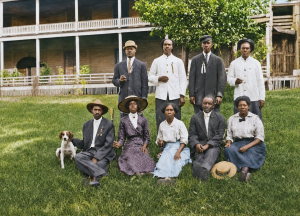
And how verily he has had his wish. About all that is left of old citizenship were Mrs. Virginia Robinson, her daughters, Miss Helen and Mrs. Moore. They seem to have been left on the mountain to preserve the history of a different day. They were among the earliest comers to Birmingham, Dr. Robinson being a physician, and their son Adrian was the first town marshal Birmingham had, it was a village then, too small for chief of police. Adrian nursed through the epidemic of cholera here in 1873, and was killed in a political riot many years ago, near Forkland, being shot from ambush, in a ride through the country to protect women and children from the ravages of a “radical mob.”

Sunday was a day of looking backward, out of sight of the world, with no sound to disturb the quiet except an occasional drop of a nut from the tree. In order to know the real truth of stories told, an old family album (not out of style) was brought out and we looked into many very dear faces again - some pictures of the children that are grandmas today - and still further on we found the old letters, and strange how they bear upon the present times; they seem to be pointing to things that are now, and tell of unrest then among the nations who are fighting today.
The following is an extract from a letter from Mrs. Robinson’s uncle, Rev. James Sawkins, rector in the county of Dorset, England, to his nephew, Lieutenant Sawkins, of Invalid’s Island of Jersey. The letter from Frampton, England, dated April 14, 1788:
“When the late sudden and brisk preparations for war were going forward, I suppose you were soon ready to give either Monsieur or Mynheer a proper reception. However, I believe you and your little family may now enjoy your sea breezes and sea prospects by day and comfortably repose by night, without any apprehension of disagreeable alarms. Since the French seem to have enough to do in their own country, and the Dutch are once more our very good friends. As to the Turks, Russians and imperialists let them go at it if they are disposed, in the meanwhile it is to be hoped our ministry will have the wisdom to keep us out of the scrape.”
Thus we see that more than 100 years ago the nations anticipated the trouble that has come today - it is well to look back and know this is the same old world after all, those of yesterday were building today - and we are reaping the fruits of their labor, and sharing their anxieties - this is life’s routine.

“Friends depart, and memory takes them
To her caverns, pure and deep,
Be it a weakness, it deserves some praise,
We love the playhouse of our early days.
The scene is touching, and the heart is stone,
That feels not at that sight, and feels at noon.”
By Mrs. J. B. Reid. Originally published in the Birmingham Age-Herald, November 16, 1915.