

Two of the letters already told on this site - the naming of Ricetown, and part of what’s known about Blount Springs’ resort hotels - came from the same writer: Mary Gordon Duffee. She deserves to be told in full, not just cited.
An antebellum family
She was born in 1844 in Tuscaloosa County to Matthew Duffee (1803-1878) and Martha Allison Gillespie Duffee (1809-1896). The 1850 census lists the household at eight people plus eight enslaved people - real antebellum wealth, consistent with how she’d later be described as “a true aristocrat.” By 1855 the family had already moved to, or begun splitting time with, Blount County; that year’s state census lists them there, household size reduced to four enslaved people. A 1920 obituary written by someone who’d known the family personally gives her mother’s name as Jane Gillespy rather than Martha - same maiden surname, different first name, a discrepancy this site hasn’t resolved. That same obituary puts her own age at death around 76 in August 1920, consistent with the 1844 birth year used here; an 1889 newspaper profile, by contrast, described her as “about fifty” that year, implying a birth closer to 1839 - loose journalism-speak rather than a precise figure, but worth knowing rather than treating 1844 as beyond question.
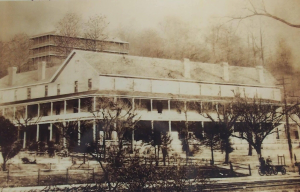
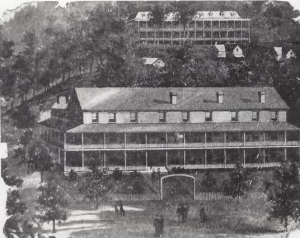
Her father, Matthew Duffee, was Irish-born, a Tuscaloosa resident since 1823 and proprietor there of the Washington House, the leading tavern of the then-state-capital, where politicians and university men gathered to argue the day’s business. About a decade before the Civil War he bought Blount Springs‘ original resort hotel - known for a time as the Goff House - and renamed it the Duffee House, running it successfully until it burned in 1869. Her mother, Martha, later served as postmistress of Blount Springs, and the 1866 state census for the area was signed by the enumerator “M. A. Gillespie” - very likely Martha herself, taking the count of her own community. A different, later-published account of his early life doesn’t agree with this one: an 1889 newspaper profile says he arrived in America around 1824 and settled first in Mobile, where he married and all four children were born, ran a hotel for years, and invested in a Red River, Louisiana plantation before moving the family to Tuscaloosa, where he bought and ran the Indian Queen Hotel rather than the Washington House. Whether the Washington House and Indian Queen Hotel were the same Tuscaloosa property under different names, two separate ventures, or a real conflict between sources isn’t settled here.
Matthew Duffee was more than a tavern and hotel man. In her own “Fruit Culture” chapter of Sketches of Alabama, Mary Gordon Duffee wrote that in 1852 he “set out at Blount Springs on the northern slope of Duffee’s Mountain an orchard of Fowler apples covering over a hundred acres” - three varieties, the Pennsylvania Wine Sap, Fowler’s Winter Pearman, and the Gold Pearman. Within five or six years he was selling fruit in quantity while giving freely to visitors, and in 1857 he won a silver cup at the Alabama State Fair in Montgomery for the finest celery exhibited. It’s a real, specific anchor for the family’s presence at Blount Springs - 1852, three years earlier than the 1855 census reference above - and a real reason the mountain carries the family name at all.

A writer with a national reach
Mary Gordon Duffee never married. The 1880 census lists her, age 36, still living at home as “daughter.” What she did instead was write. Her best-known work, a series of fifty-nine travel sketches following the old Huntsville Road from Tuscaloosa through Jonesboro and Elyton to Blount Springs, ran in the Birmingham Weekly Iron Age from 1885 through 1887 and was later published in book form as Sketches of Alabama. The material came from a lifetime of firsthand travel: every spring, her father would lead the family and their household up that same road by carriage and wagon for the four-day trip to Blount Springs and the summer season - childhood research, in effect, for a body of work now considered a genuine contribution to Alabama historiography. She was educated at the Tuscaloosa Female Seminary, and on at least one occasion signed her work “Mary Duff-Gordon & Co.” She also contributed to national magazines - Youth’s Companion and Scribner’s among them - a real reach for a writer working from rural Blount County. A separate series, “Pioneer Families of Jones Valley,” is credited to her as well, distinct from both the Iron Age sketches and her Blount County News and Dispatch letters. She kept writing local history well past the Iron Age series: a separate “Sketches of Blount County Alabama” piece on the old mills near Blountsville ran in the Blount County News and Dispatch in February 1892, and the letters she sent that same paper describing Ricetown and the farm country west of Blount Springs, written in 1898, are the same hand - a documented writing career spanning at least 1885 to 1898.
What the family record shows
Across the decades, one by one, she outlived them all. Her father died in 1878. Her brother George Gillespie Duffee died in 1886. Her mother died in 1896. Her brother James Knox Duffee died in 1904 - almost certainly the brother a Birmingham newspaper would describe, that same year, as having “lived in the mountain home with her” until his death “several months ago.” Her brother William Henry Duffee died in 1908. By the 1910 census she’s listed as head of her own household, alone; the 1920 census, taken the year she died, lists the same.
An earlier profile, 1887
The earliest profile of her found so far ran in the Savannah Morning News on January 2, 1887, seventeen years before the Age-Herald piece below:
“One of the rising literary lights of Alabama is Miss Mary Gordon Duffie, of Blount Springs. She is known as the ‘Poetess of the Mountains.’ She is a lady of many eccentricities both in manner and appearance. She wears men\’s shoes and keeps a musket behind her door for the benefit of intruders. She says she will die as she has lived - on the top of Duffie\’s Mountain.”
Advertisement

She did exactly that, thirty-three years later.
“The woman hermit”
On May 10, 1904, the Birmingham Age-Herald ran a profile - unsigned, credited only to “a well known Alabamian” - that is the fullest surviving picture of who she’d become:
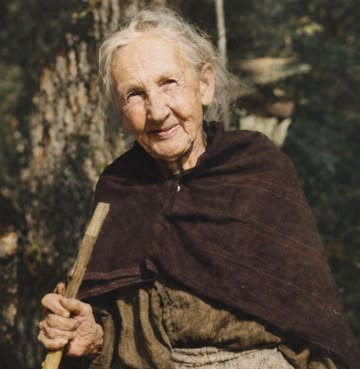
“Mary Gordon Duffee, the woman hermit who lives on top of Duffee’s mountain and who is known throughout Alabama and the south as a woman of great learning, is in dire need of assistance… She is now about 60 years old and has spent all of her life on top of this beautiful yet wild mountain. She is a true aristocrat and has spent most of her days in reading and writing. Her little apartments are strewn with papers of all kinds and on the old-fashioned tables and bureaus there are great stacks of time worn and moth eaten works by great masters. She is perfectly familiar with all the classics and in her conversation uses the most beautiful and classic English… For many years her brother has lived in the mountain home with her, but several months ago he died and she is left entirely alone. She fell ill of la grippe and has suffered intensely. Now she is badly in need of the mere necessities of life… I fear, however, that she would not accept aid unless offered in a very skillful manner.”
The same piece calls her “an ideal character for Charles Dickens” - meant as praise for how vivid she was, but a hard thing to read about a real woman who was, by that account, alone, sick, and going without necessities on a mountain she’d lived on her whole life.

In 1870, she spent several months in Forkland, Greene County, staying with friends. Her own 1920 obituary notes, without elaborating further, that Klan activity was active in that area at the time, and that some believed she\’d gone there to gather information for that reason - adding that “at no time was her loyalty to the south doubted.”
Death, 1920
In her final years, a Black caregiver named Mary Points looked after her, having “inherited the care of Miss Mary Duffee from her mother” and walking miles daily for years to do it - a detail her own obituary treats with real respect, asking whether “this service is the kind that the true spirit demands.”
She died on Thursday, August 19, 1920, at Blount Springs, at about 76 years old. The Birmingham News reported it two days later - misspelling her name “Duffy” - noting simply that she “had a number of relatives in Birmingham and was well known here.” The Southern Democrat, the paper her own letters had once appeared in, gave her a fuller send-off a week later:
“In the death of Miss Mary Gordon Duffee at Blount Springs last week, a wonderful character passed to the great beyond. Miss Duffee was about 76 years of age, and with all her eccentric ideas, was a most wonderful woman. She knew the history of this country as few knew it and was a writer with a national reputation. She was well informed on any subject and great men and women who visited her in her little cottage on Duffee’s mountain were held spell-bound for hours with the magic of conversation.”
Advertisement

Her own last written words, quoted in that same 1920 obituary: “May the God of all mercies keep us / And watch us always, / And when the bugle sounds the last call / May we, both of us, be found ready.”
Related: Mary Gordon Duffee and the Missing Confederate Money - her Civil War story, including the unresolved question of which Duffee actually held the Blount Springs postmaster’s commission.
Sources: Virginia Pounds Brown and Jane Porter Nabers, introduction to Sketches of Alabama by Mary Gordon Duffee (University of Alabama Press, 1970); “Sketches of Blount County Alabama,” The Blount County News and Dispatch, February 25, 1892; Bhamwiki, “Mary Gordon Duffee”; Alabama Authors project, University of Alabama Libraries; Find a Grave memorial; and 1850/1855/1866/1880/1910/1920 census records, family death dates, and the May 1904 Birmingham Age-Herald and August 1920 Birmingham News / Southern Democrat obituaries; Augusta Randolph Reid, “Death of Mary Gordon Duffee Removes a Historic Figure,” Birmingham Age-Herald, August 21, 1920; and “One of the Rising Literary Lights,” Savannah Morning News, January 2, 1887.