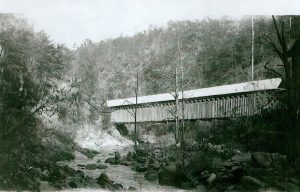


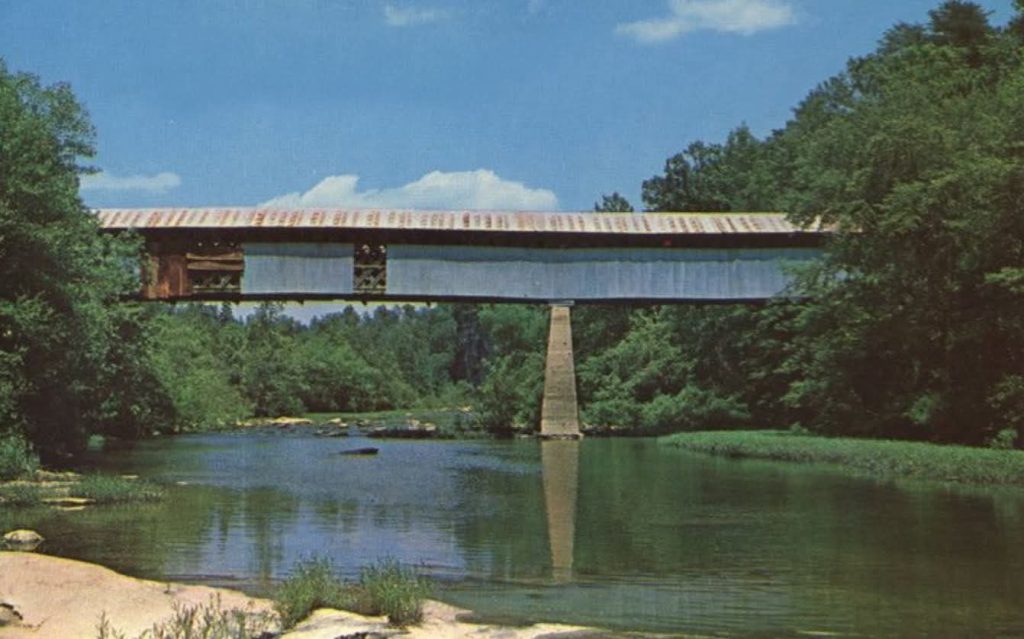
Most everyone in Blount County knows Swann Bridge is worth talking about - three hundred and twenty-four feet of Town lattice timber strung across a gorge of the Locust Fork, the longest historic covered bridge still standing in Alabama. But the name on it has its own story, and it’s worth telling in full.
The bridge was built in 1933 by a crew of fourteen to twenty men who lived on-site for the job. They hoisted every beam into place with ropes, mixed concrete by hand, and didn’t own a single piece of machinery between them. Their foreman was a 31-year-old Locust Fork native named Zelma Clyde Tidwell.
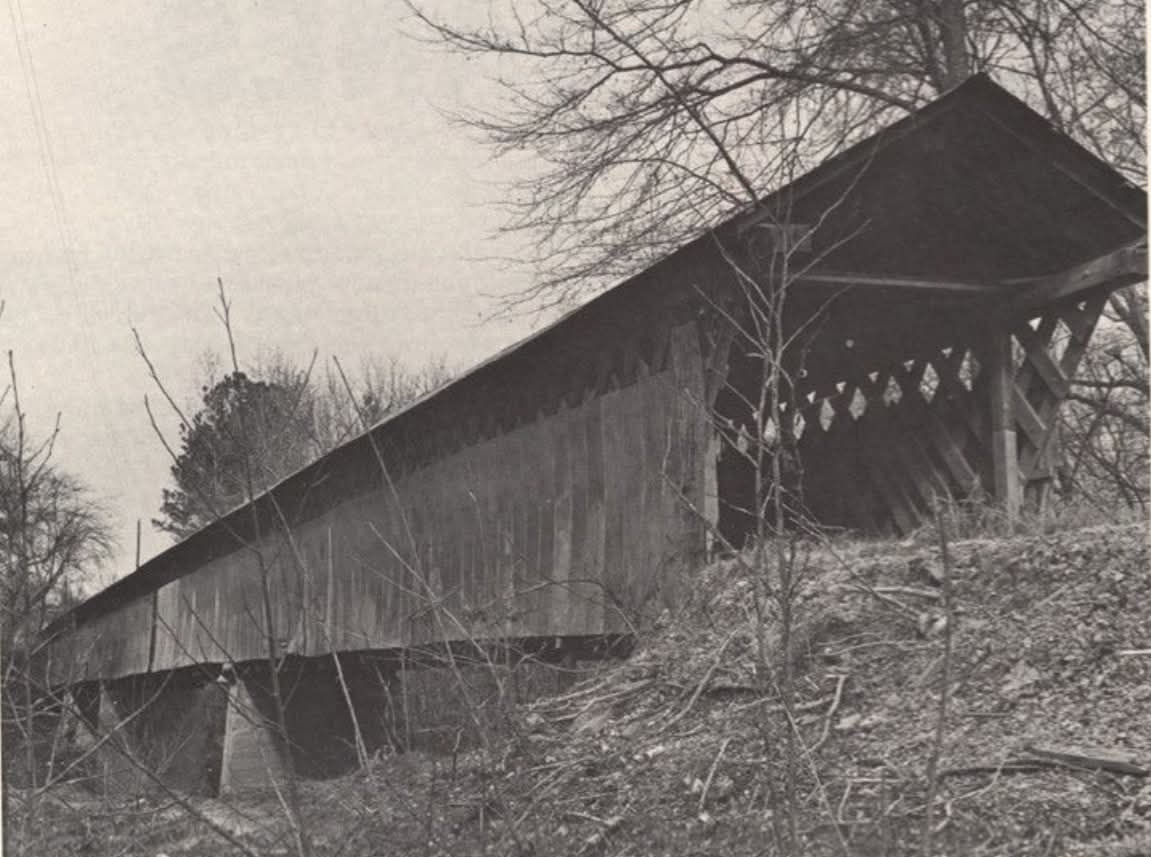
The bridge wasn’t always called Swann Bridge. When the Blount County Commissioners ordered it built on September 11, 1933 - a covered lattice bridge, with an abutment at each end and two piers - it was going to be called the Joy Bridge. Joy was the small community on the other side of the river that Cleveland folks couldn’t reach without fording the water.
At the dedication dinner that November, a community physician named Dr. Brown stood up and suggested they rename it - after the family whose land they’d built it on, and who had made it possible.

The Swanns.
George Washington Swann was born June 5, 1840, on Thacker’s Creek in Blount County. Farmer. Potter. Leathersmith. Blacksmith. Confederate soldier. Justice of the Peace. He married Elmirah Jane Jett, daughter of Joseph Henry Jett of the Cleveland area, and they worked land above the Locust Fork and raised a family on it. He died March 5, 1919, and is buried at Graves Gap Cemetery in Hayden.
Their son, Thomas Clark Swann, grew up to be Justice of the Peace himself - same as his father - and farmed the same ground. He died in 1930, at 57, of heart trouble. He never saw the bridge built.
But his widow did.

Her name was Lula. In 1933, Lula Swann - a widow on a family farm, holding onto land her father-in-law had worked since before the Civil War - signed over the right-of-way to Blount County so the road and bridge could be built, so her neighbors wouldn’t have to ford the river anymore.
She didn’t ask for it to be named after her family. Dr. Brown suggested it, the community agreed, and on November 7, 1933, at a dinner in Cleveland, the Joy Bridge became the Swann Bridge.
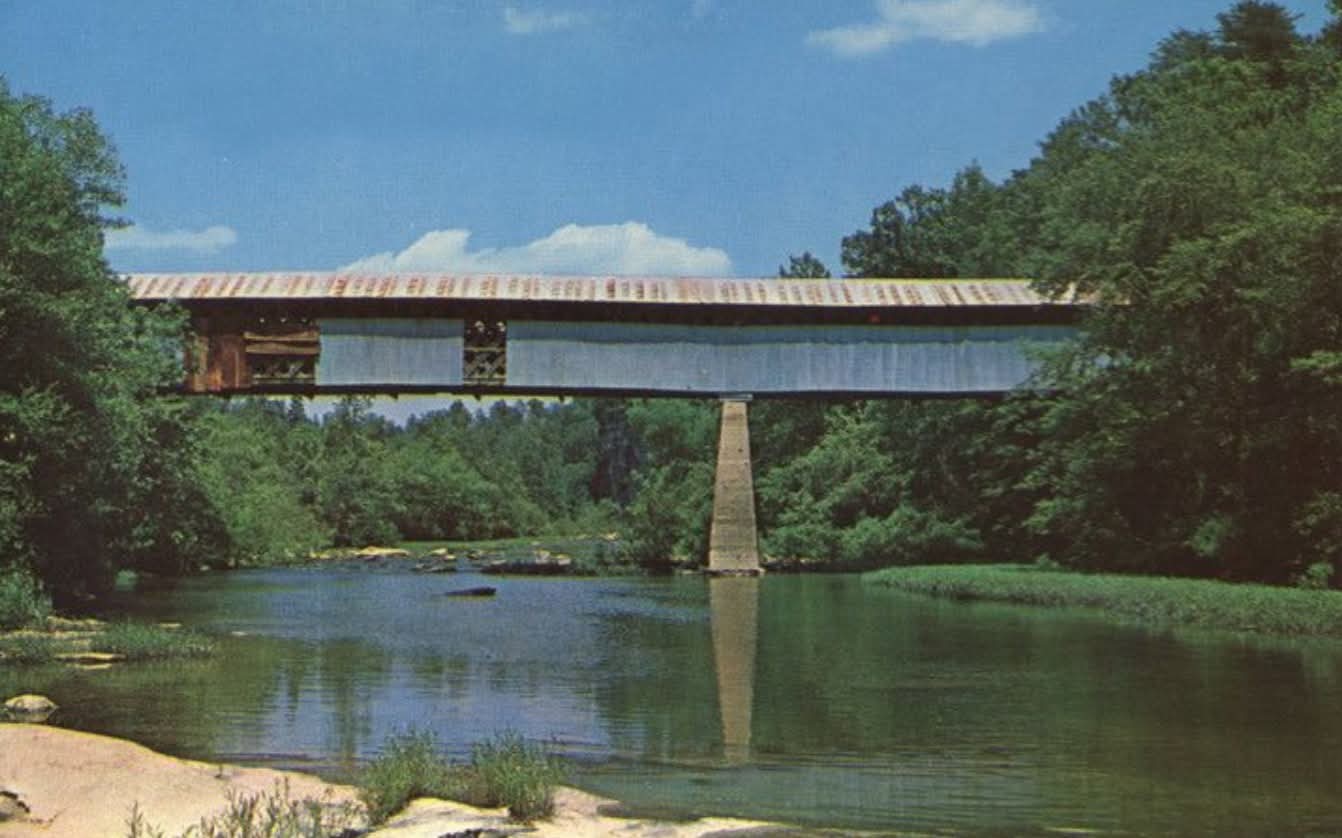
Lula’s granddaughter, Bonnie Swann Montey, still lives on Swann Bridge Road - three generations of Swanns beside that same crossing, watching the river flow through the same spot.
The bridge was listed on the National Register of Historic Places in 1981. It closed for safety concerns in 2009, was restored, and reopened to traffic in October 2012. There are cameras on it now.

None of that changes what it really is: a widow’s gift to her community, pressed in timber and lattice, and a county road that still carries her family’s name.
Ninety-two years old and still standing. Eight more years to the centennial - worth marking properly when it comes.
Sources: historic-structures.com; Find a Grave memorials for George Washington Swann and Thomas Clark Swann.
Related: Swann Bridge holds the record now, but it wasn’t always the longest. Read about the Standridge Bridge, once the longest covered bridge in the South, before it burned in 1967.