

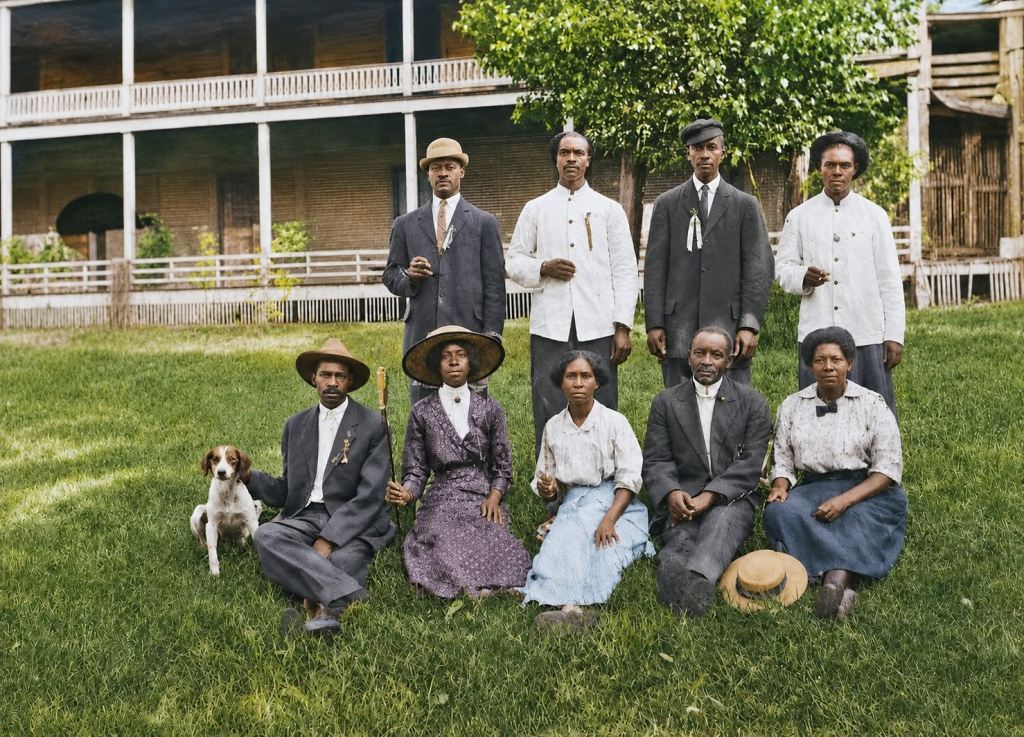
The senators and celebrities who filled Blount Springs’ guest registers weren’t the ones who actually kept the resort running - and they weren’t the only Black history this ground holds. A staff portrait taken on the hotel lawn around 1900 shows the Black men and women - cooks, waiters, porters, household staff - whose labor made the Sloss-era resort possible, in a labor system typical of Southern resorts of that era. They rarely appear by name in the newspaper accounts that recorded the guests.
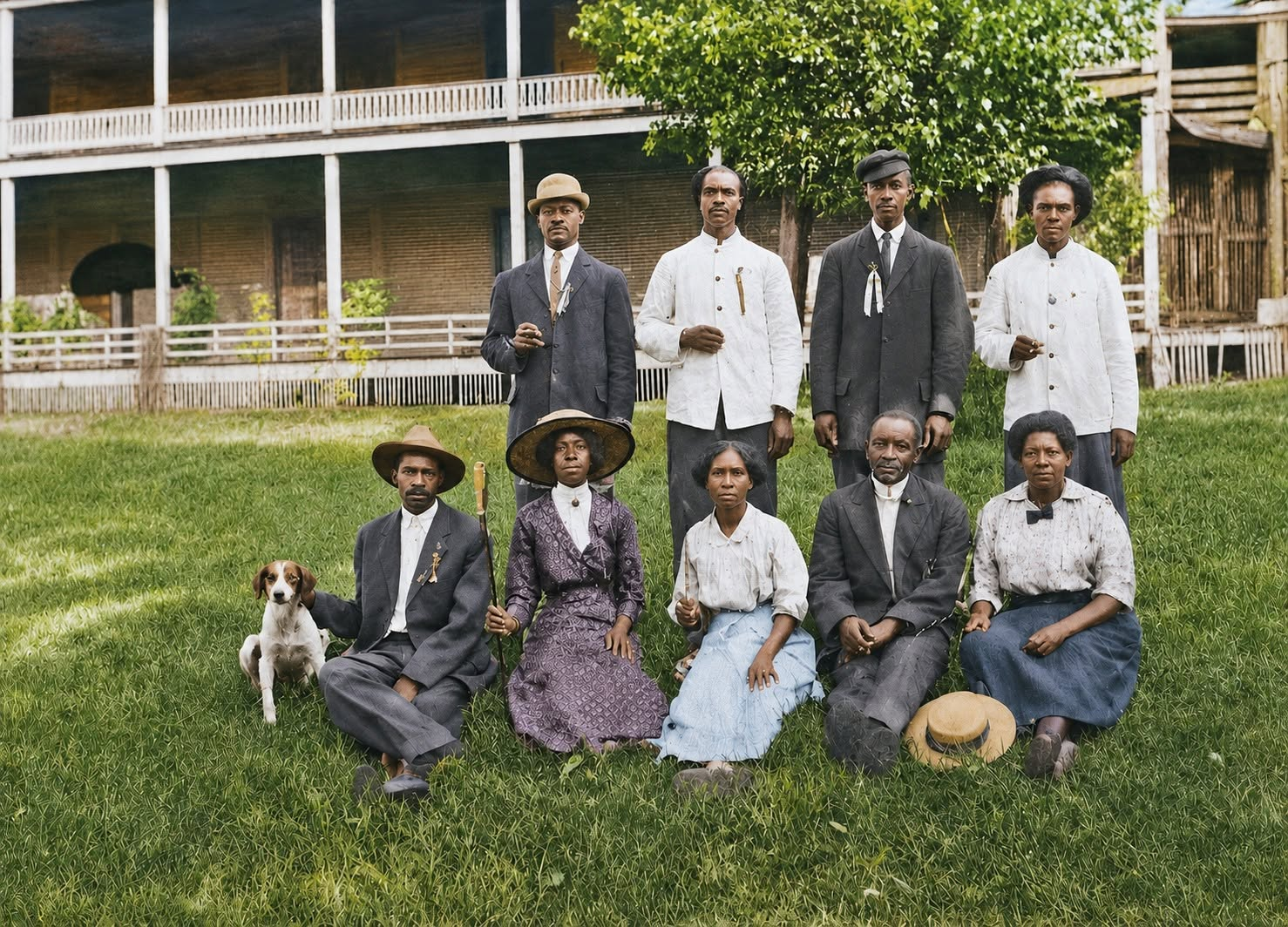
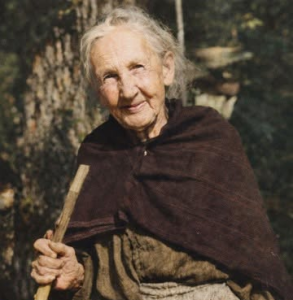
Two men are named directly in the surviving record. Ed Brown drove the resort’s livery for forty years before being promoted to mail carrier, per a 1915 account (see “An Autumn Day at the Old Home Town“). And on the mountain nearby, Mary Points cared for Mary Gordon Duffee in her final years, walking miles daily for years to do it.
In 1884, Blount Springs hosted Hon. Theophile T. Allain, a Louisiana state legislator, and his wife - described in a contemporary account, reprinted from the New York Globe, as “the first among the colored families of the South to ask for accommodation” at the resort. Allain was given a cottage in line with the resort’s other cottages and dined in the same dining room as roughly 250 other guest families that season. He was a real, independently documented figure: born enslaved on a plantation in West Baton Rouge Parish, Louisiana, he served in the Louisiana House of Representatives (1872-1874 and 1879-1886) and state Senate (1875-1878), working alongside Reconstruction-era Louisiana governor P.B.S. Pinchback, and became one of the wealthiest Black planters in the state before his political career ended in 1887.
That same year, a one-line notice announced a “grand picnic” for “the colored people of Blount and adjoining counties” at Blount Springs on May 3, 1884, with preparations made for 6,000 people - one of the largest documented Black community gatherings found anywhere in this project’s research, at a scale far beyond anything else recorded here.

Just across the county line in what’s now Cullman County, an 1890 account in the Huntsville Gazette - one of Alabama’s Black-owned newspapers of the era - described a nearby settlement known as the Colony: at least thirteen Black-owned farms, forty to two hundred acres each, held outright, with a church and schoolhouse serving fifty to sixty pupils under teacher Miss F. M. Holston. At Blount Springs itself, the same account named Mr. Myers, who owned property directly at the hotel and ran a respected business there.
Related: Blount Springs, the resort itself, and An Autumn Day at the Old Home Town and A Near Birmingham Resort - Blount Springs, the two Mrs. J. B. Reid reprints that name Ed Brown directly.
Sources: “Blount Springs,” Huntsville Gazette, August 9, 1890; a Theophile T. Allain item reprinted from the New York Globe, 1884; a one-line 1884 picnic notice, source paper not given on the clipping in hand; and Mrs. J. B. Reid, “An Autumn Day at the Old Home Town,” Birmingham Age-Herald, November 16, 1915.