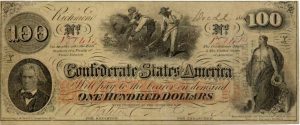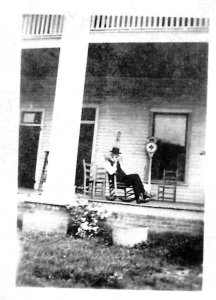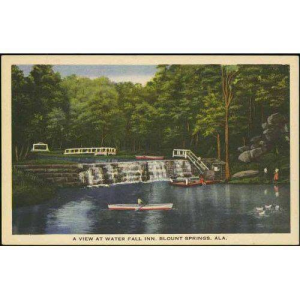


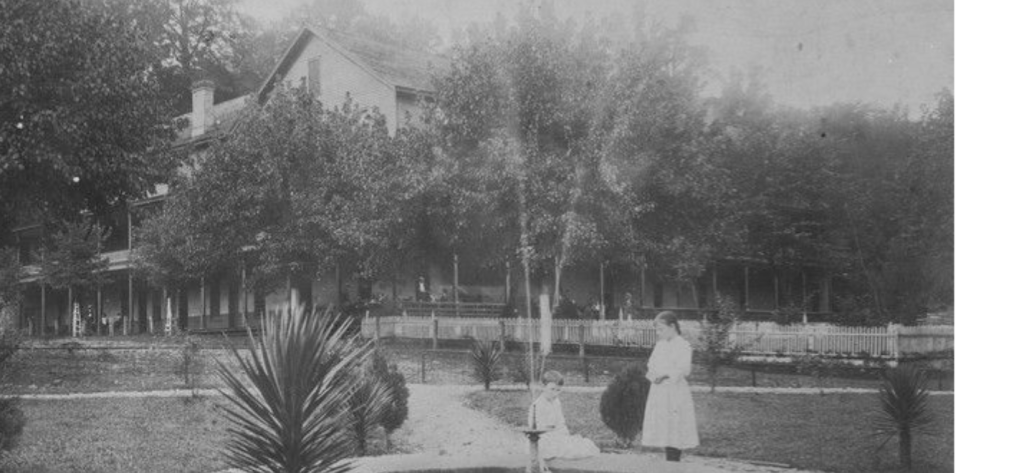
Blount Springs was a mineral-springs resort community that drew wealthy visitors from across the South throughout the antebellum period and beyond. The earliest specific reference found to date is around 1815, when Davy Crockett is believed to have spent time recuperating at the sulphur springs here.
A post office at Blount Springs opened in 1830 and ran continuously until 1957, per the county’s historical-places gazetteer - the earliest confirmed civic marker for the community, predating the resort-era references below.
The hotel era
Writing a countywide survey in 1855, Blount County historian George Powell singled the springs out by name: “The ‘Blount Springs,’ are in themselves, one of the greatest natural advantages of our county. At these Springs, within an area of a few rods, are found the White, Red, and Sweet-Sulphur, and Freestone water, and at a short distance, the Limestone and Chalybeate… they promise at some day, to command great patronage.” Powell was describing raw natural springs with a reputation, not yet a resort on the scale that would follow.
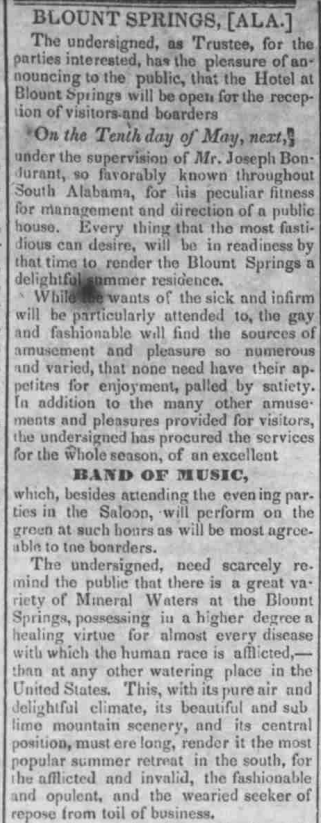
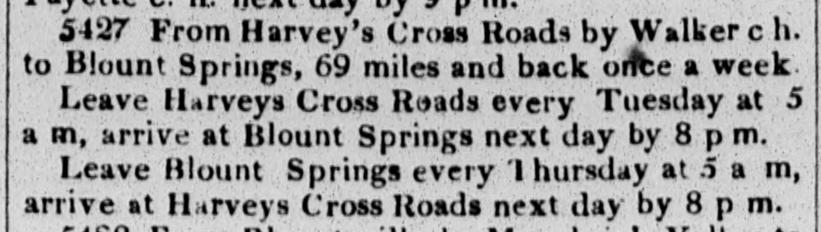
By 1841, an established “Hotel at Blount Springs” was already advertising a full season under manager Joseph Bondurant - a live band for evening parties, mineral-water treatments touted for nearly every ailment, and boarding for visitors from across the South. Stagecoach mail service ran weekly that same year between Blount Springs and Harvey’s Cross Roads, a 69-mile route each way.

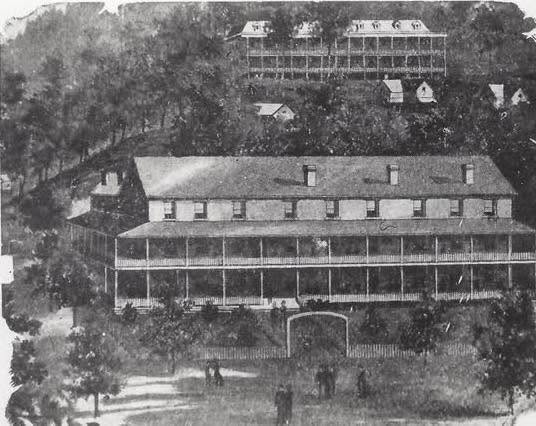
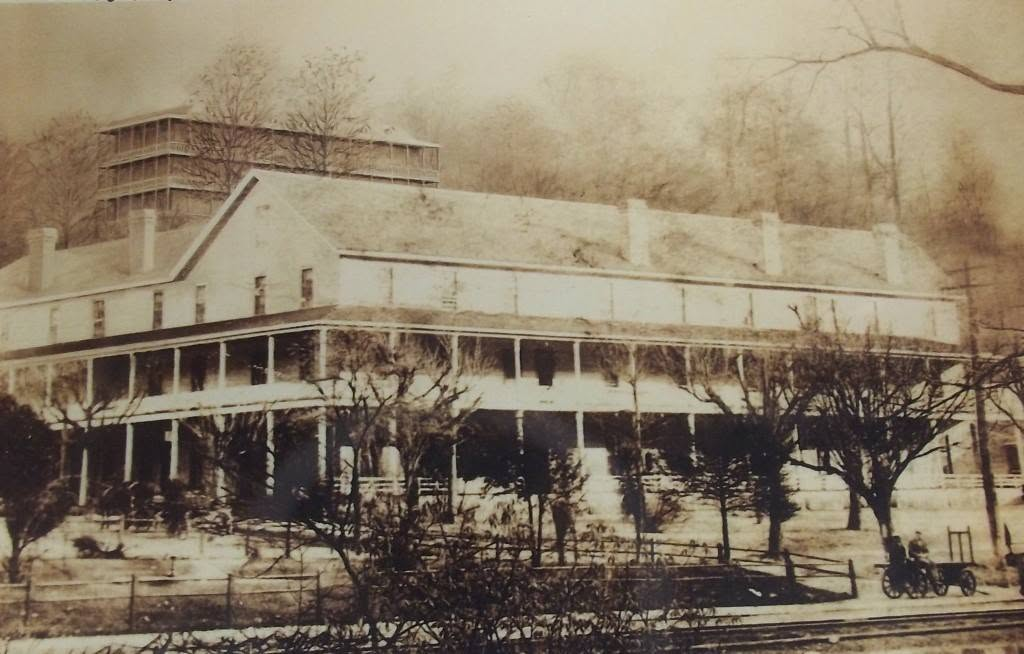
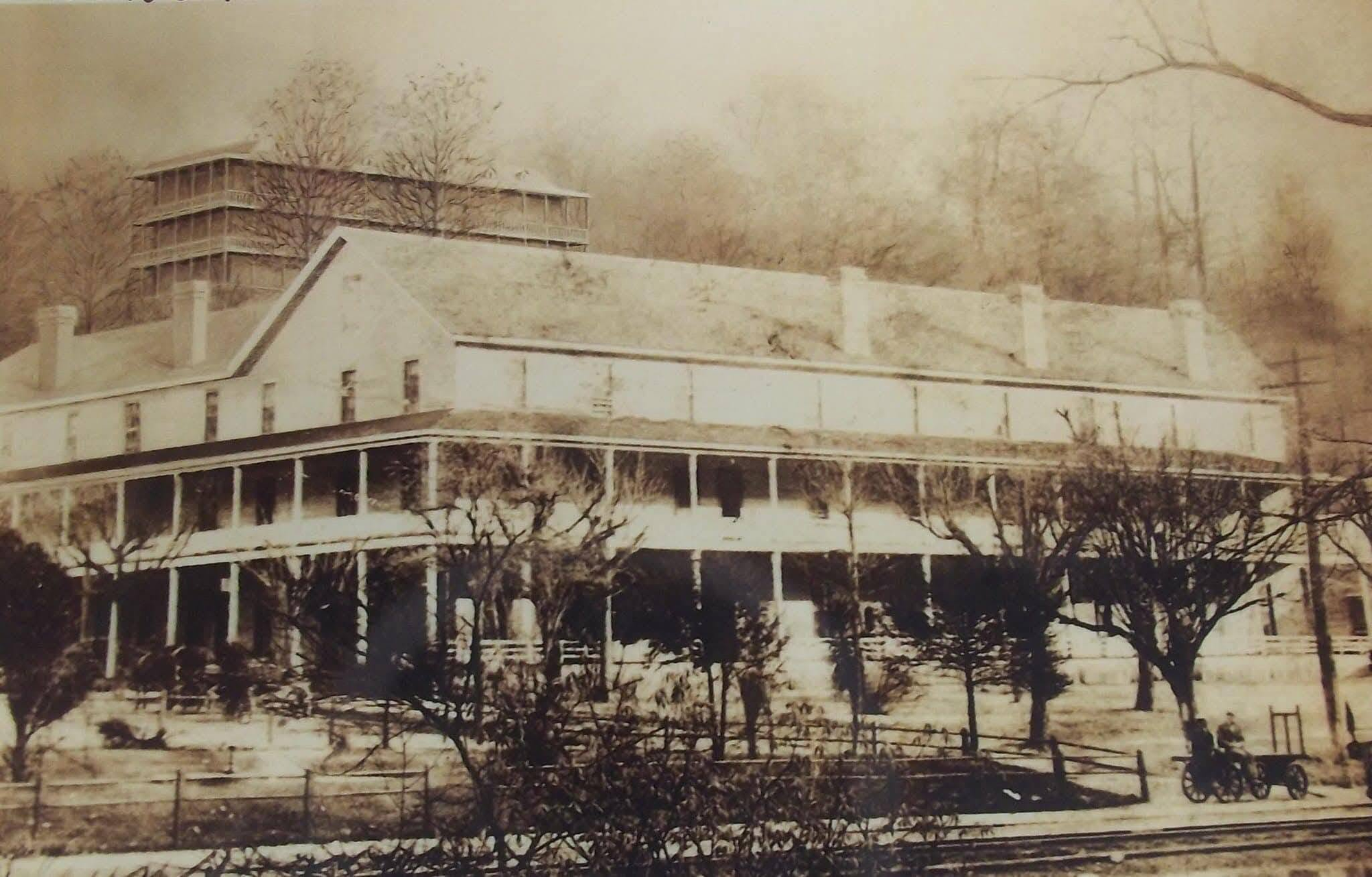
That original hotel building - known for a time as the Goff House - was later purchased by the father of Mary Gordon Duffee, an Alabama author later documented for her “Sketches of Alabama,” a series of travel pieces that ran in the Birmingham Weekly Iron Age in 1886-87. He renamed it the Duffee House and ran it successfully until it was destroyed by fire in 1869. Colonel J. F. B. Jackson - a Georgia-born Confederate veteran turned railroad contractor - built the Jackson House in 1874 and, with future Birmingham industrialist Henry F. DeBardeleben as a business partner for a few years, expanded it into the larger “New Jackson House” in 1878. Ownership changed hands several more times over the following decade - see the full Col. J.F.B. Jackson biography for the fuller chain - before The Blount Springs Co., backed by brothers James and Mack Sloss of the Sloss furnaces in Birmingham, bought the property outright in 1887 and built the reputation that made Blount Springs one of the best-known resorts in the Southeast. Around this same period, in 1877, Jackson’s friend Col. Fitzhugh - a railroad engineer - built the large house north of downtown Blount Springs, known as Glenwood, that visitors still mistake today for the hotel itself. Fitzhugh built it as his own family’s home, choosing a spot where Jackson, close by, could look in on Fitzhugh’s wife and three daughters while Fitzhugh was away on railroad work. For a stretch around that same time the post office itself went by a different name entirely: an 1874 newspaper notice lists “L’Orient” as the name of the post office at Blount Springs - a separate town, founded that year by Dr. Francis Louis Constantine adjoining the hotel and springs, that barely outlasted the sale of its own town lots.
The social scene
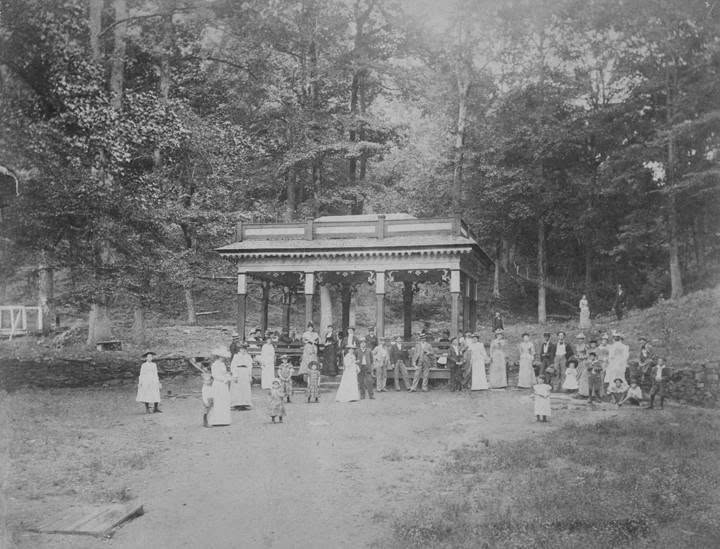
A visiting writer’s 1887 feature counted twelve separate mineral springs at Blount Springs, all within about sixty yards of one another, and named a natural curiosity guests came to see for themselves: Blowing Cave and Blowing Spring, where a steady current of air rising out of the ground was strong enough to blow out a candle.
Gambling was legal at the resort under Alabama law at the time - slot machines and roulette tables were fixtures in the hotel, card games drew crowds, and a half-mile horse track gave visitors somewhere to bet the daylight hours away - a ten-pin alley, put up in 1875, was there even before that. The track sat in what’s still known today as Cedar Grove, on County Road 7 between Blount Springs and Hayden - a Cedar Grove cemetery from that era still stands there, with numerous Byars family burials, including a W.G. Byars (1826-1902) who is very likely the same W. G. Byars named below from Duffee’s 1898 letter. By the 1890s the crowd the resort pulled in was genuinely high-profile: Alabama senators and governors were regulars - in August 1888, Governor Thomas Seay used Blount Springs as a base of operations, receiving word there by telegram that “the war at Round Mountain” had ended, a militia response to unrest at an iron furnace in Cherokee County, though exactly what the conflict itself involved hasn’t been identified - and local history accounts describe a stopover by Theodore Roosevelt and an extended visit from stage actress Lillian Russell, whose day of sunbathing reportedly left her covered in chigger bites - by one telling, it took every ounce of butter in town to soothe her afterward. Neither celebrity visit is independently documented beyond those local-history sources, so they’re worth reading as strong local tradition rather than settled fact.
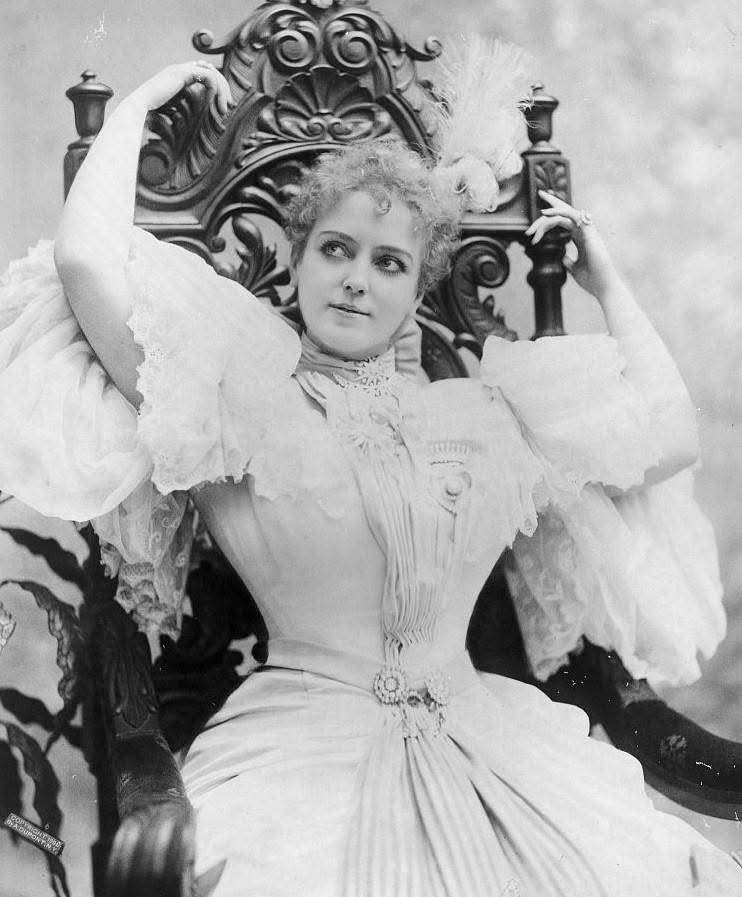
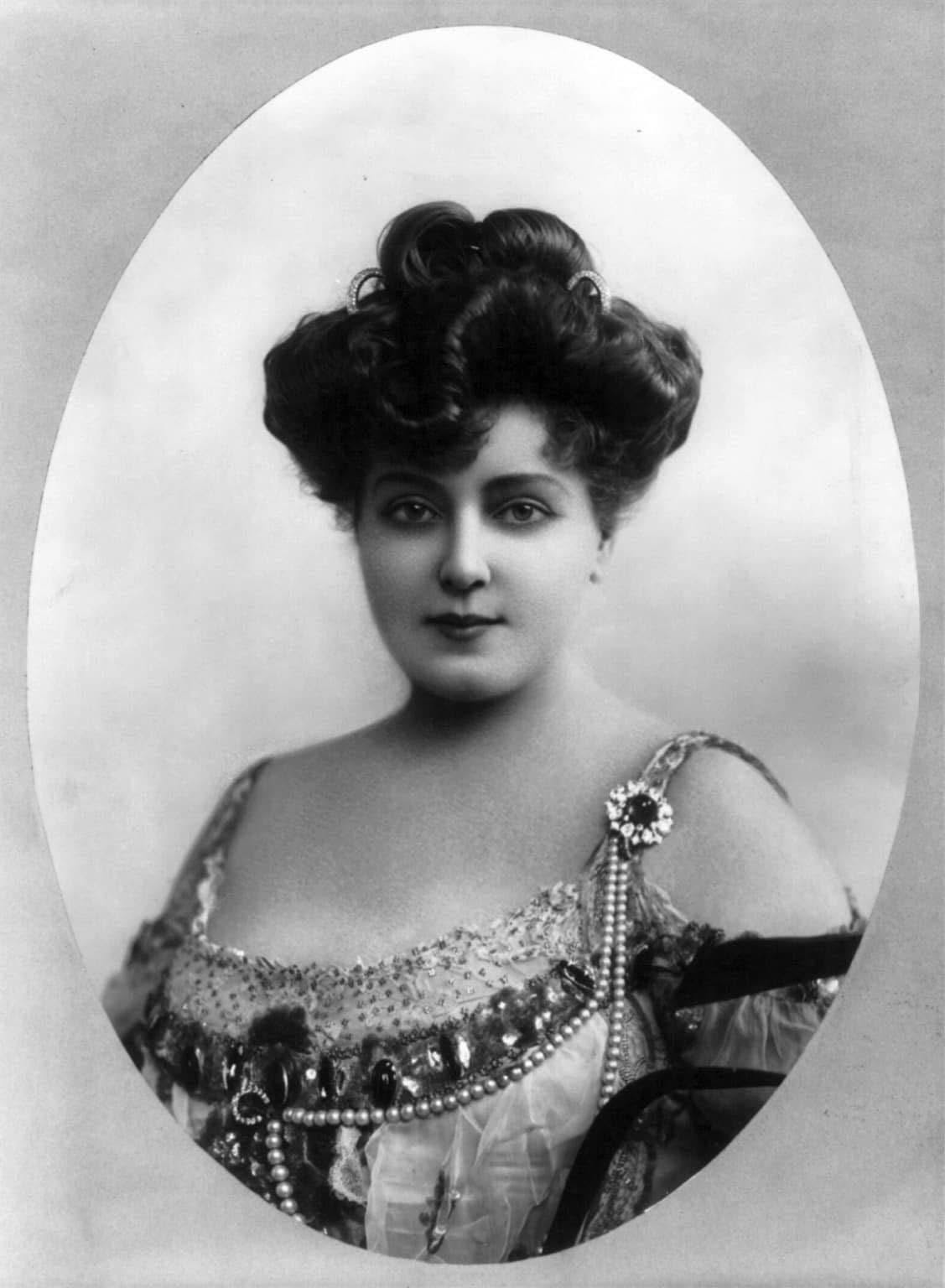
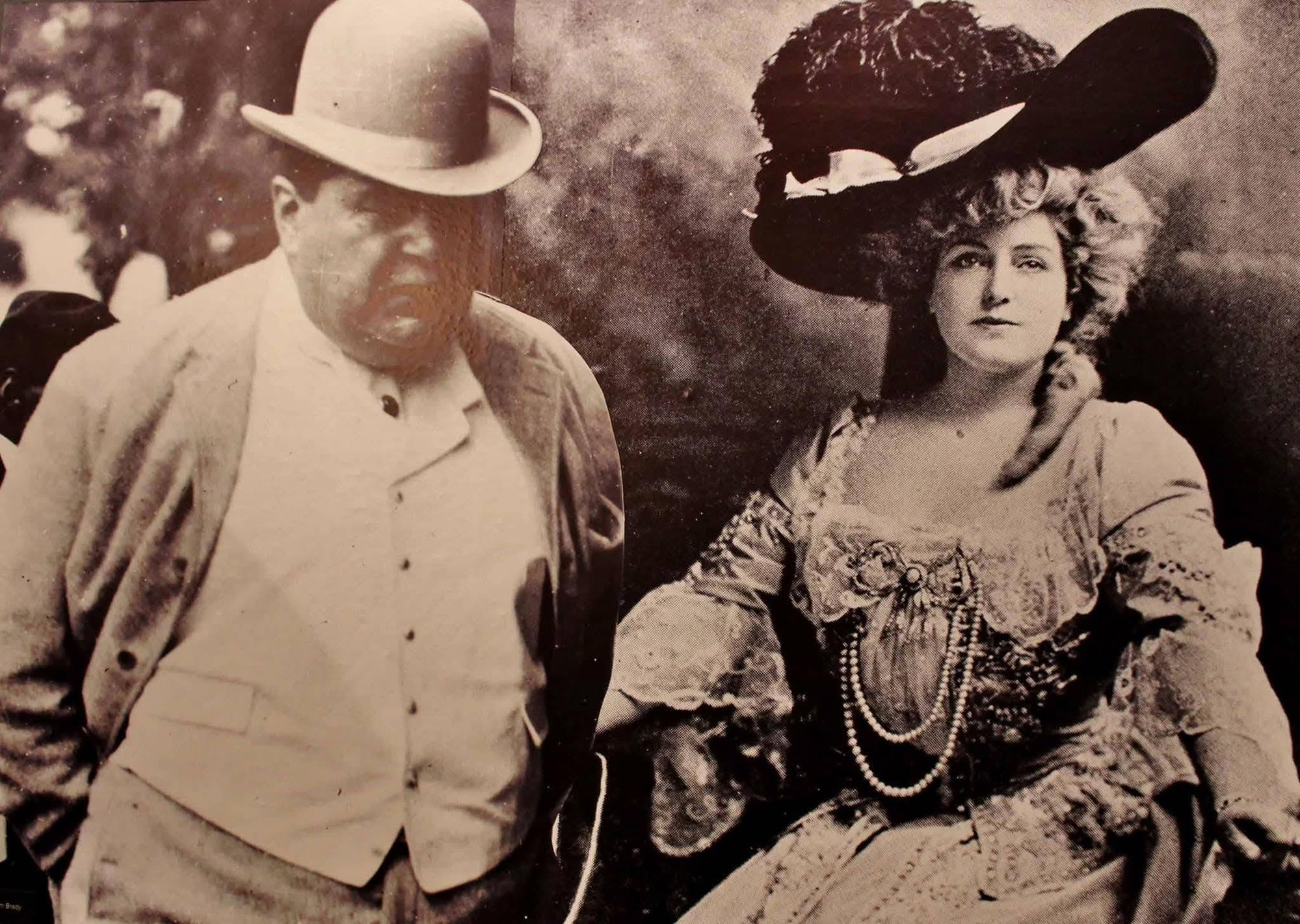
The two photos above are believed to show Lillian Russell, and Russell with Diamond Jim Brady, based on family research rather than a confirmed original caption or source - if that’s wrong, let us know and it’ll be corrected.

Who ran it, and how it ended
See Black History at Blount Springs for the fuller story of who actually kept the resort running day to day, and of the wider Black community connected to this place.
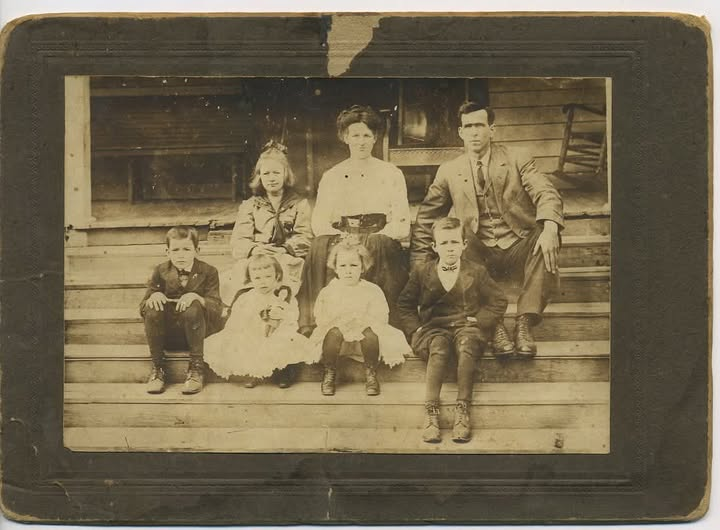
One family’s account, shared by a descendant, names the man who actually ran the place day to day: Albion Benton Green, who managed Blount Springs for Drennen until it burned. The family moved to Birmingham afterward, though their Blount Springs home is still standing. Green’s granddaughter, Ruth Green Jones, remembered watching the fire as a child - guests throwing suitcases from the upper-floor windows as it burned. Family members reportedly kept returning to Blount Springs for years afterward, well into recent decades, to fill a bottle or two from the sulphur springs, which were still flowing.
That run ended for good on June 4, 1915, when fire swept through Blount Springs, destroying two hotels and several stores. A wire report the same day put the loss at about $35,000 and said the town was “practically burned up” - a separate, specific blow on top of the economic damage already done by the L&N’s 1914 line relocation.
From the 1820s through the 1930s, Blount Springs’ mineral springs and rural setting made it a summer resort destination with a reach that went well beyond the region - internationally known, not just a local or state draw. Like Reid’s Gap, the community lost much of its economic activity when the L&N relocated its main line in 1914-15 - though the name itself outlived the resort by decades. A station called Blount Springs Station, sited on the new line near the Blount Tunnel rather than at the town itself, remained an active, scheduled stop as late as 1958; by a 1973 timetable it was gone, the line running straight from Bangor to Hayden with nothing between them.

Beyond the resort
Duffee herself, writing to the Blount County News-Dispatch on February 17, 1898, made a point of describing the place beyond its hotels: “This place is so generally known as a summer resort that many of its other features are overlooked.” Just west of the springs, she wrote, began “one of the best farming sections of the county” - the plantation of a wealthy Walker County lumber manufacturer named Long, and beyond that the extensive farms of the Rice brothers, a settlement populous enough that it came to be called Ricetown, a name that’s still on the map today.
Back at Blount Springs itself, her letter caught the ordinary rhythm of a working town alongside the resort trade: Mr. W. G. Byars retiring from the mercantile business he’d run, handing his partnership to his son Joseph B. Byars; a stone quarry belonging to a Mr. Harrell, closed for a spell that year, with real credit given to his assistant, James L. Cox, “for his able discharge of all his duties.” Small notices, but they’re the texture of a real town, not just a resort’s off-season. The town had a functioning jail as early as 1870, per an 1885 crime notice describing an escaped prisoner recaptured fifteen years after the killing that first landed him there.
Beyond the hotel, Blount Springs had a real industrial side too, tied to the same rock quarry the Sloss family operated on the mountainside - a lime-and-quarry operation worked in part by leased convict labor, and costly enough in lives that two rail workers died running its rock trains. See The Lime Kilns of Blount Springs for the full story; the two kilns themselves still stand today, visible from Highway 31.
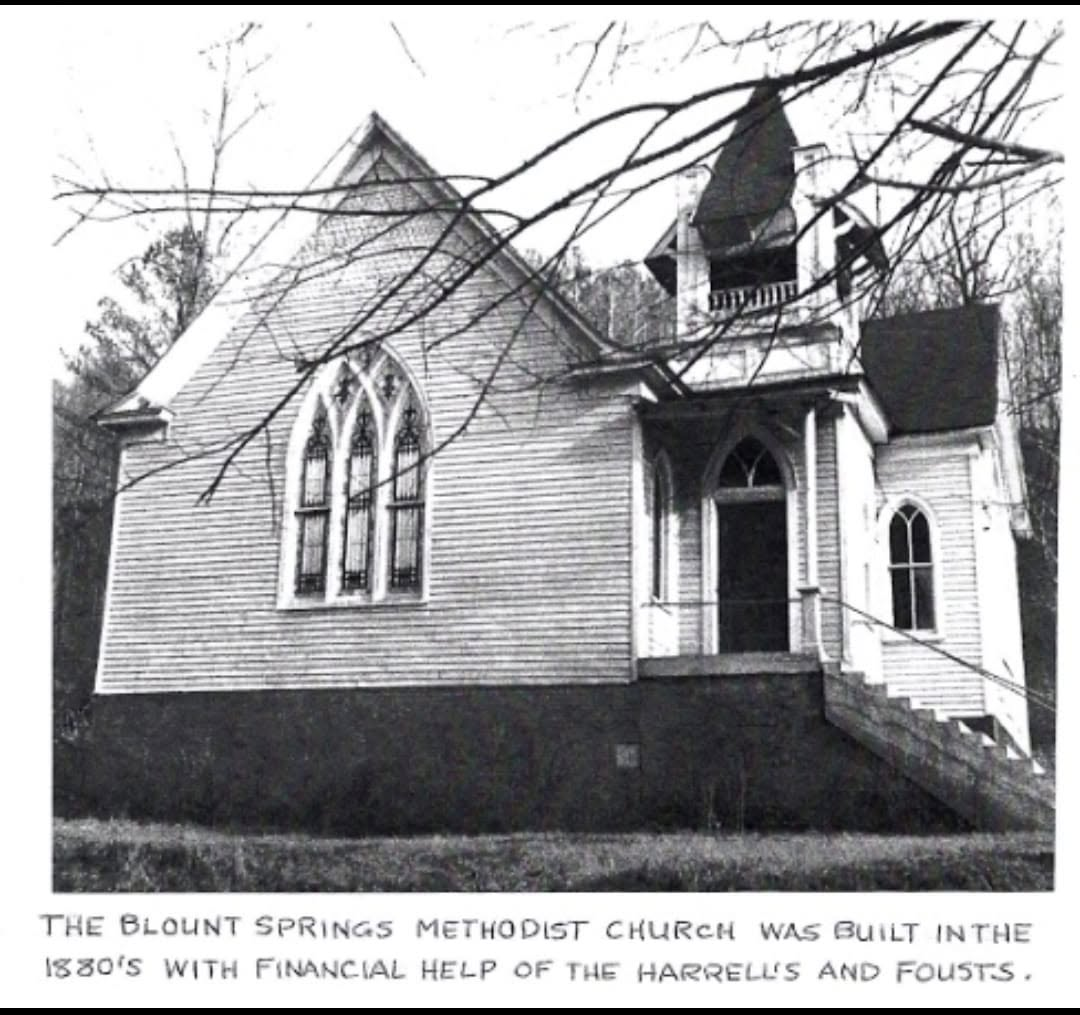
The Blount Springs Methodist Church itself went up in the 1880s, funded in part by the Harrell family - very possibly the same Harrells who owned the stone quarry - and the Fousts, a family with genuinely deep Methodist roots in Blount County; a Peter, John, William, and David Foust all served as Methodist local preachers in the county going back to the 1820s, mostly around Murphree’s Valley. One detail hasn’t been verified: family tradition holds that the church was built “by a one-armed man,” which hasn’t turned up in anything checked so far - worth treating as unconfirmed unless something more solid surfaces.

The resort era wasn’t the end of Blount Springs’ life as a destination. See Blue Hole, Waterfalls USA, and Country Boy Eddie for the swimming hole that drew its own crowds for decades after the hotels burned - and for how that same ground became the private, gated Blue Hole Lake community that sits there today.
Related: Col. J.F.B. Jackson: The Man Behind the Jackson House - the fuller ownership story. Also: The Lime Kilns of Blount Springs and Black History at Blount Springs - two threads substantial enough to deserve their own telling. Also: Blue Hole, Waterfalls USA, and Country Boy Eddie - the site’s 20th-century life as a swimming hole and roadside attraction. Also: Ricetown - the farming community just west of the springs, and the same Mary Gordon Duffee letter quoted above tells its origin story too. Also: The First Mount Brook Was in Blount County - Mel Drennen, who owned this resort from 1900 to 1914, and his connection to the naming of Birmingham’s Mountain Brook. Also: Philip Henson - born here in 1827, later a Union spy and the first Special Secret Service Agent under President Grant. Also: An Autumn Day at the Old Home Town and A Near Birmingham Resort - Blount Springs - two firsthand newspaper dispatches by Mrs. J. B. Reid, 1915 and 1921, describing the resort’s decline and a booster’s case for its revival.
Sources: George Powell, “History of Blount County,” reprinted from the Alabama Historical Quarterly (1965), originally written 1855; James Sulzby, Historic Alabama Hotels and Resorts (University of Alabama Press, 1960); Wikipedia, “Blount Springs, Alabama”; “History of Blount Springs: Historian Greg Burden speaks at Cullman County Public Library,” Cullman Tribune; Donna R. Causey, “Actress Lillian Russell discovered the anguish of chigger bites in Alabama,” Alabama Pioneers; Cedar Grove/Johnson Cemetery transcription, AlGenWeb Blount County; Genealogy Trails, Blount County, Alabama newspaper transcriptions (Southern Argus, Birmingham Iron Age, Marion Herald, 1874-1887, transcribed by Veneta McKinney); “Early Methodism in Murphree’s Valley,” Alabama Christian Advocate 7, no. 49 (1888), on the Foust family’s Methodist ministry in Blount County; the Albion Benton Green family account, shared by descendant Bob Jones; and “Traits and Stories of Blount: Noted Characters, Col. J.F.B. Jackson,” The Blount County News and Dispatch, January 20, 1881 (see the full Jackson biography for more, including the fuller ownership chain and lime-kiln/Black-history sourcing); the Memphis Daily Appeal, May 14, 1874, for the Jackson House opening ad; Thomas P. Grasty, “A Southern Resort,” The Arkansaw Traveler, May 28, 1887; Robert S. Davis, “Legacy of the Olive and Vine: Alabama’s French Refugee Colonies,” Agricultural History 79 (2005), for the L’Orient founding story; and The Atlanta Constitution, August 28, 1888, for the Governor Seay item.